Need stump grinding in Staunton?
Ready to start? Send a request through the form, or request a callback to check provider availability. Have your photos and notes handy, and we will point you to local providers.
No obligationRequest a stump grinding estimate
Complaintsmain Tree Service is a referral service. We do not run grinders. We connect you with independent providers in our network who grind stumps below ground level and clean up the chips. This page walks you through the job in order.
First, document the stump. Next, request estimates. Then pick a provider and prepare the site. A stump left after a storm, a cut-down, or a past removal can cause injuries, sprouts, and rot. Keeping photos, notes, and written quotes makes every step easier and gives you a clear paper trail.
A stump is easy to ignore. It is also easy to trip on or hit with a mower. Treat it as a small project with a clear order: document, quote, prepare, grind, maintain.
Severe thunderstorms and hail can snap trunks and leave jagged stumps. Storm tree clearance usually removes the fallen wood first. The stump comes next. If a stump sits near a walkway, driveway, or play area, mark it off and call it a priority.
If the tree is still down or leaning, that is a different job. Emergency tree removal is covered on its own page.
Before anyone touches the stump, collect your records:
Save these in one folder. Providers can quote faster from clear photos.
Stumps cause more trouble than they look like they do. Here is the usual list:
Hot humid summers speed up rot. That makes pests more likely.
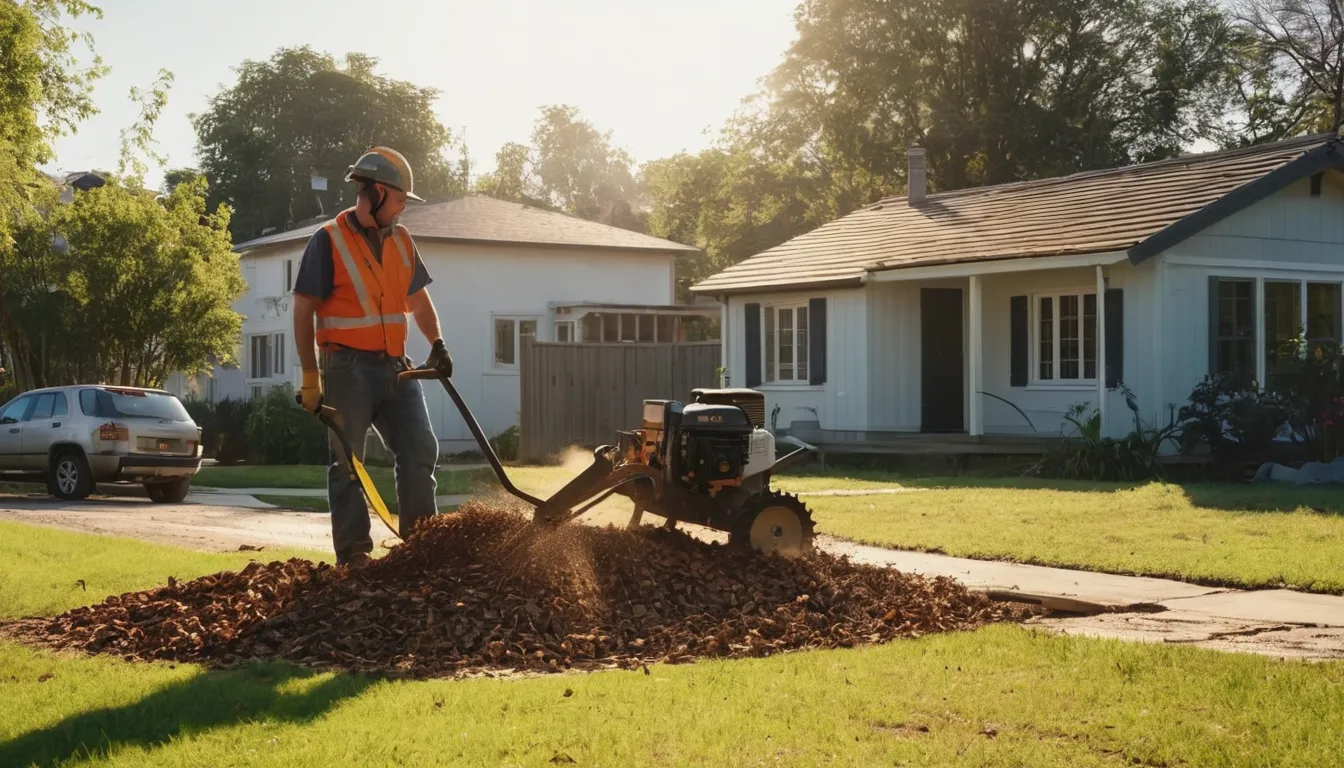
A stump grinder is a machine with a spinning cutting wheel. The provider sweeps it across the stump and cuts it into chips.
1. The provider checks the site and marks hazards. 2. The wheel grinds the stump below ground level. 3. Large roots near the surface are ground as well. 4. Chips are raked into the hole or hauled away.
Most grinding goes about 6 to 12 inches deep. Ask for the depth you need.
Grinding cuts the stump into chips. Full removal digs the whole root ball out. Grinding is quicker and leaves less mess. Removal makes sense if you plan to build over the spot or the roots cause damage.
Ask the provider which fits your plan. Write down the answer.
Old stumps are fine to grind later. Even a stump that is many years old can be ground. Dry, hard wood just takes longer. Photos and any old paperwork from the first removal help a provider understand the history.
Use this short checklist:
Providers usually arrange utility locating, but ask about it. Request a callback to check provider availability in your area.
Price depends on a few things. These matter most:
See the cost table on this page for typical U.S. ranges. Always get the quote in writing.
Ask these before you agree to the work:
Keep the answers with your photos.
First, take an after photo. Next, check the hole. Then fill it with the chips or with topsoil, and tamp it down. The mound will settle over the next weeks, so top it up when needed.
Spring flooding and deep frost can shift soil over a filled hole. Watch the spot after wet weather. Add soil as it sinks. Pull any sprouts early. Plant grass seed or a small shrub once the soil has settled.
Storm damage often hits more than one tree. Check the others for dead limbs, cracks, and lean. Note what you see with dates and photos. A tree falling service may be needed if one looks unsafe.
Store the quote, invoice, photos, and notes together. If a stump was damaged in a storm, some policies may cover sudden damage, so check your policy. Providers can often help document damage for a claim.
First, take the photos. Next, request an estimate. Then compare written quotes and pick a provider from our network.
The provider grinds the stump below ground level so you can mow and plant.
Large roots that stick out of the soil can be ground down on request.
Ask whether chips are raked into the hole, piled for mulch, or hauled away.
Request a quote that lists the stumps, the depth, and the cleanup, in writing.
These are typical U.S. ranges. Prices vary by job, soil, and access. Treat them as a starting point and always get a written quote before work starts.
| Item | Typical range | Notes |
|---|---|---|
| Minimum service charge | $100 – $200 | Many providers set a base fee per visit |
| Small stump (under 12 in.) | $100 – $250 | Easy access keeps the price down |
| Medium stump (12–24 in.) | $200 – $450 | Hard wood takes more time |
| Large stump (over 24 in.) | $400 – $900 | Wide stumps may need extra passes |
| Surface roots | $100 – $300 | Depends on root size and count |
| Chip haul-away | $50 – $200 | Often optional if you keep the mulch |
Take wide and close photos, measure the width, and write a short note with the date.
Send your details and photos through the form to start the process.
Check depth, cleanup, and price in writing, and ask questions before you decide.
Clear the area for grinding day, then fill and watch the hole afterward.
Photos and notes help providers give a clearer estimate and give you a record to keep.
Independent local providers do the grinding, not us.
One request form, then compare written quotes on your own schedule.
Requesting an estimate does not commit you to hire anyone.
Ready to start? Send a request through the form, or request a callback to check provider availability. Have your photos and notes handy, and we will point you to local providers.
No obligationReady to start? Send a request through the form, or request a callback to check provider availability. Have your photos and notes handy, and we will point you to local providers.
No obligation