Need tree removal in Staunton?
Ready to start? Send a request through the form, or request a callback to check provider availability. Have your photos and notes handy, and we will point you to local providers.
No obligationTaking down a tree is a big job. A tree can be tall, heavy and close to a house, a fence or a power line. Complaintsmain Tree Service is a referral service, so it does not cut, climb or haul. It connects homeowners in Staunton with independent providers in our network, and those providers do the work. You pick the provider, review the quote and decide.
This page shows the steps in order. First, document it with photos and notes. Next, collect written estimates. Then prepare the site and plan the care after the work. Cold winters, hail, summer storms and spring flooding all stress trees across the Staunton area, so a clear record helps with providers and with any insurance talk. Keep a paper trail from the first photo to the final invoice.
First, check safety. Is the tree leaning, split, or touching a house, a car or a wire? Move people and pets away. Stay clear of any line that touches the tree. Then Request a callback to check provider availability, or use the request form.
Photos come before anything else. Take these:
Turn on the date stamp on your phone. Save the photos in one folder. Keep a paper trail.
Next, write down what you see. Note when you first saw the problem. Add the trunk width, the rough height and the distance to the nearest building. List any storm dates. Providers can quote faster when you hand them facts.
The reasons are usually plain:
Deep frost and hard summer storms wear trees down over the years. Old frame houses and low ranch roofs make the risk feel closer.
Look for these signs:
See two or more? Ask a provider to look at it soon. Write down the date you asked.
First, the provider looks at the tree and the site. Next, they set a plan. Then the provider's crew sets ropes, a lift or a crane. They cut the tree in sections and lower each piece. Last, they clear brush and haul or stack the wood, as the quote says.
Price depends on the job. Providers look at these things:
Typical U.S. ranges are in the table on this page. Always get a written quote.
Some towns ask for a permit before a large tree comes down. Rules may also apply to street-side trees, protected species or older districts. Check with your city office and your homeowners association. If wires are involved, the provider may need to contact the utility. Keep copies of every approval.
Some policies may cover sudden damage, such as a tree broken by a storm. Check your policy. Providers can often help document damage for a claim. Keep the photos, the notes, the written quote and the invoice together. Ask your insurer about deductibles before work starts.
Use this checklist:
1. Ask for a written quote that lists the scope. 2. Ask the provider to show proof of insurance. 3. Ask how cleanup and haul-off are handled. 4. Ask who will be on site. 5. Compare two or three quotes line by line.
A small number on the page does not always mean a clear scope. Read what each quote includes.
Write each answer next to the quote.
Then prepare the site:
Tell the provider about low roofs, tight side yards and soft ground after spring flooding.
Stay indoors or at a safe distance. Do not stand under the work area. Do not walk up to the crew while saws or ropes are in use. Ask questions before the work starts or after it ends.
Next, close out the job:
1. Walk the site with the provider. 2. Check for lawn, fence and roof damage. 3. Photograph the cleared area. 4. Get the invoice in writing. 5. File it with your photos and notes.
Prevention is simple. Check your other trees each spring and after big storms. Cut dead limbs early. Keep mulch off the trunk. Do not pile soil against a trunk. Watch how water drains near the foundation and sump discharge. If a stump is left, ask about stump grinding.
A provider looks at the lean, the access and nearby hazards before giving you a written quote.
Sectional cutting and lowering keep heavy limbs away from roofs, fences and wires.
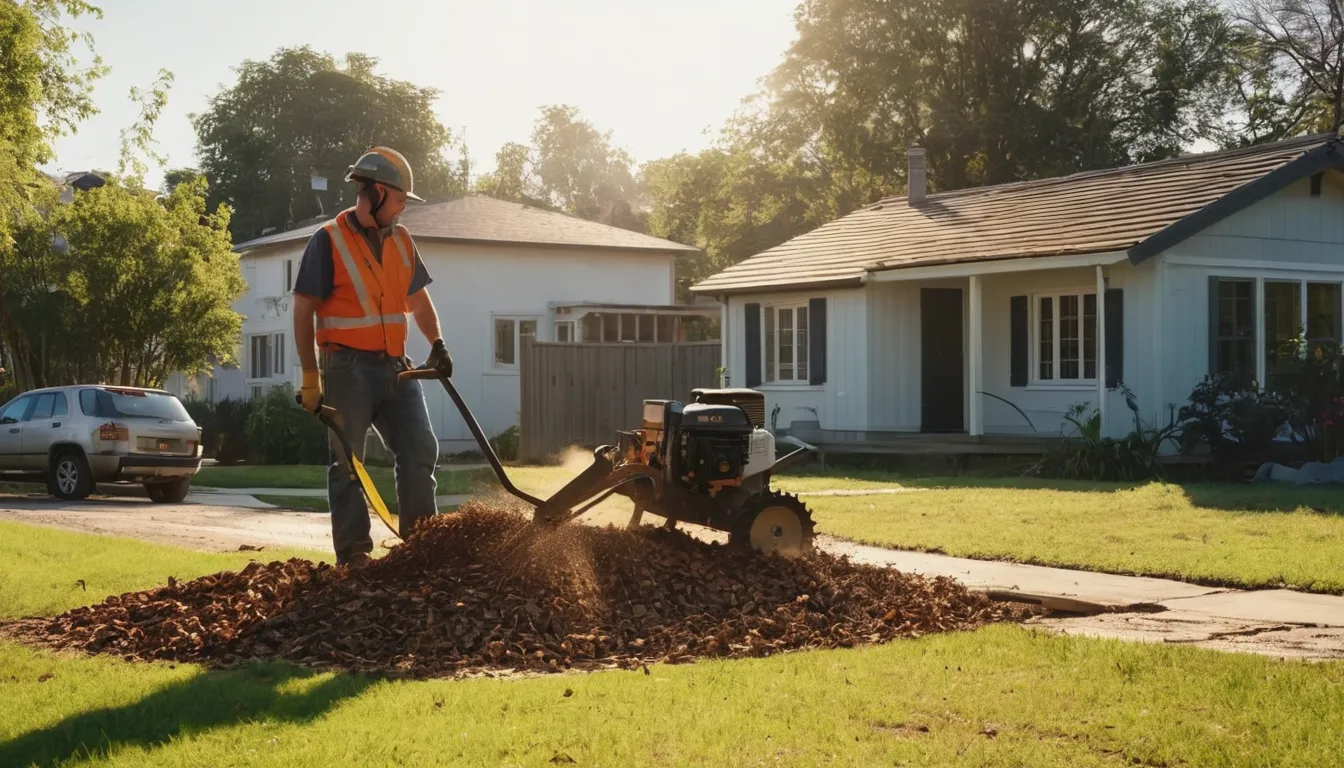
Brush and logs can be cleared when the quote says so. Ask what is included.
The quote, invoice and photos give you a record for your files and any claim.
These are typical U.S. ranges, and every job is different. Height, access, tree health and cleanup all change the price. Use the numbers to plan, then get a written quote from each provider.
| Item | Typical range | Notes |
|---|---|---|
| Small tree, under 30 ft | $150 – $600 | Easy access, light cleanup |
| Medium tree, 30–60 ft | $500 – $1,500 | Most yard trees fall here |
| Large tree, over 60 ft | $1,200 – $3,500 | Needs more gear and time |
| Tree near house or wires | $800 – $3,000 | Extra care raises the price |
| Crane-assisted removal | $1,500 – $5,000 | Used when access is tight |
| Wood and brush haul-off | $100 – $400 | Sometimes part of the quote |
Take dated photos and short notes of the tree, the lean and anything it threatens.
Ask providers for itemized quotes and compare scope, cleanup and stump work.
Clear cars, paths and yard items, and mark buried lines before the work.
Check the site, file the invoice, then inspect your other trees each season.
Photos and notes help providers understand the job and give clearer quotes.
A tidy file helps with estimates, permits and any talk with your insurer.
Providers in our network are independent and work in your area, so you can compare.
Request an estimate and decide on your own time.
Ready to start? Send a request through the form, or request a callback to check provider availability. Have your photos and notes handy, and we will point you to local providers.
No obligationReady to start? Send a request through the form, or request a callback to check provider availability. Have your photos and notes handy, and we will point you to local providers.
No obligation